Whitepaper
•
Onshore Supply Chain Must Adapt for Global Growth
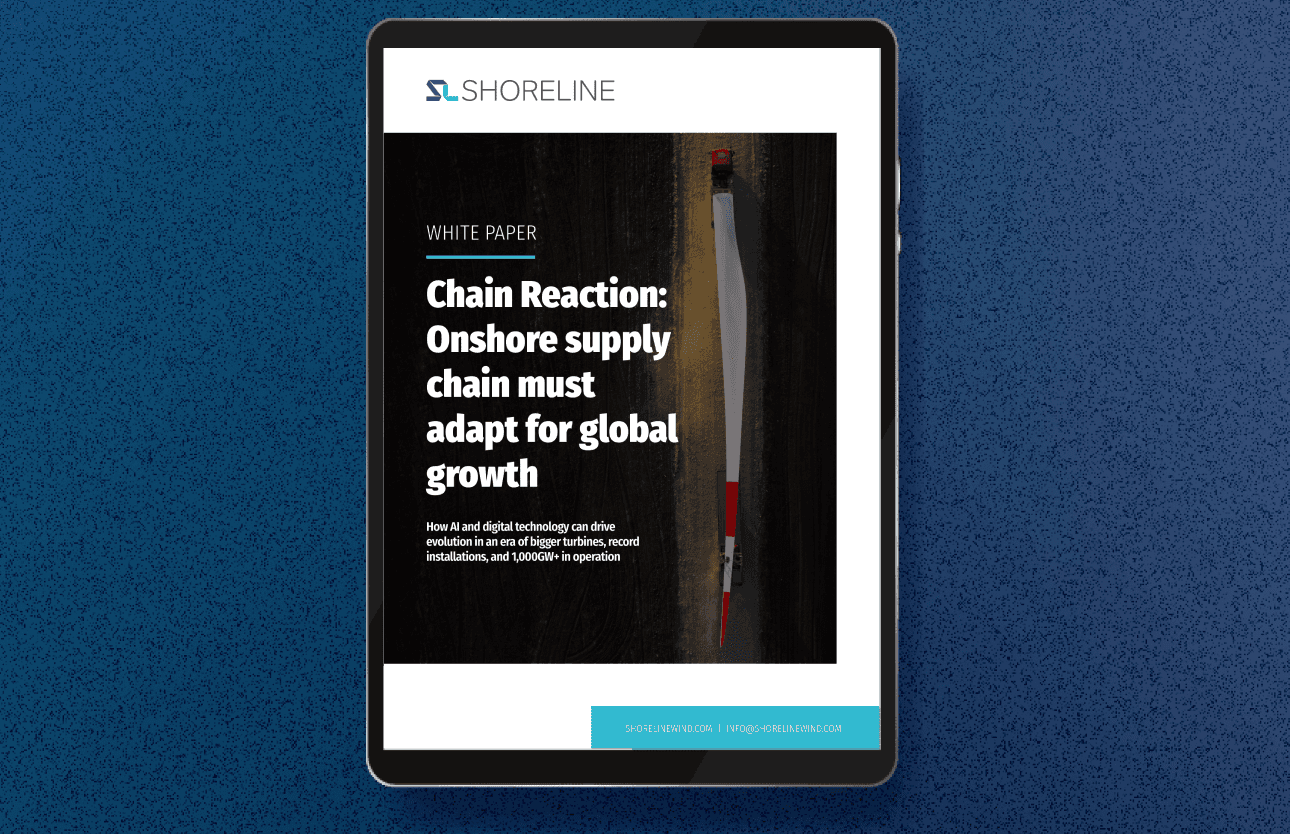
The onshore wind sector delivered record installations in 2024, but behind the numbers lies a supply chain under growing pressure. From turbine quality issues to mounting regulatory requirements and emergency repair delays, developers and operators face compounding risks. Shoreline Wind’s latest white paper, Chain Reaction: Onshore Supply Chain Must Adapt for Global Growth, 𝐂𝐡𝐚𝐢𝐧 𝐑𝐞𝐚𝐜𝐭𝐢𝐨𝐧: 𝐎𝐧𝐬𝐡𝐨𝐫𝐞 𝐒𝐮𝐩𝐩𝐥𝐲 𝐂𝐡𝐚𝐢𝐧 𝐌𝐮𝐬𝐭 𝐀𝐝𝐚𝐩𝐭 𝐟𝐨𝐫 𝐆𝐥𝐨𝐛𝐚𝐥 𝐆𝐫𝐨𝐰𝐭𝐡, explores how AI and digital tools can help solve critical bottlenecks and unlock new efficiencies across the project lifecycle.
What to gain from the whitepaper?
Whitepaper highlights:
Larger, more complex turbines are driving up capex and making quality assurance harder, putting added pressure on developers, operators, and insurers alike.
Regulatory demands such as the EU’s Corporate Sustainability Due Diligence Directive are straining supply chains already stretched by high demand and limited capacity
Emergency repairs, especially for key components like transformers, can lead to months of lost revenue without proactive supply chain coordination
AI-powered platforms can support more efficient planning, workforce coordination, and risk mitigation. These tools are helping to ensure projects stay on schedule and on budget.