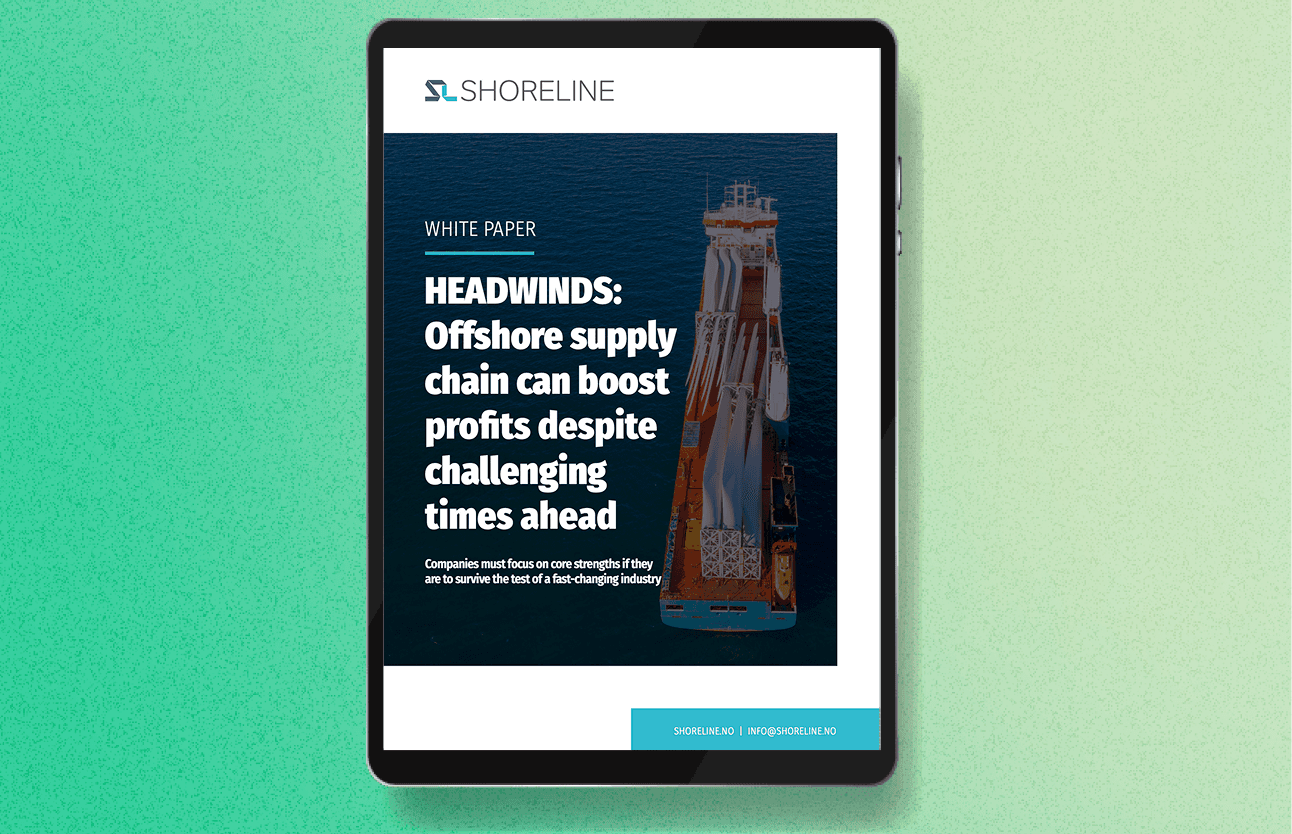
Whitepaper
•
Offshore supply chain can boost profits despite challenging times ahead
The offshore wind supply chain is under increasing strain as the industry accelerates toward ambitious 2030 clean energy targets. Systemic challenges like tight margins, port constraints, and innovation bottlenecks threaten growth and profitability, making resilience a critical priority. Shoreline Wind’s new report, “𝐇𝐄𝐀𝐃𝐖𝐈𝐍𝐃𝐒: 𝐇𝐨𝐰 𝐭𝐡𝐞 𝐒𝐮𝐩𝐩𝐥𝐲 𝐂𝐡𝐚𝐢𝐧 𝐂𝐚𝐧 𝐓𝐮𝐫𝐧 𝐂𝐡𝐚𝐥𝐥𝐞𝐧𝐠𝐞𝐬 𝐢𝐧𝐭𝐨 𝐎𝐩𝐩𝐨𝐫𝐭𝐮𝐧𝐢𝐭𝐢𝐞𝐬,” explores actionable strategies to overcome these hurdles and build a collaborative, innovative supply chain that supports the sector's rapid expansion.
What to gain from the whitepaper?
Whitepaper highlights:
The offshore wind supply chain must address systemic challenges, including tighter margins, port capacity constraints, and slower innovation investment, to meet 2030 targets
Smaller firms require support through standardized contracts, improved payment terms, and collaborative opportunities to foster growth and innovation
Governments play a vital role by integrating non-price criteria into tenders and providing clearer policies to create long-term investment security
Leveraging specialist service providers and digital platforms can streamline operations, optimize resources, and enhance supply chain resilience globally